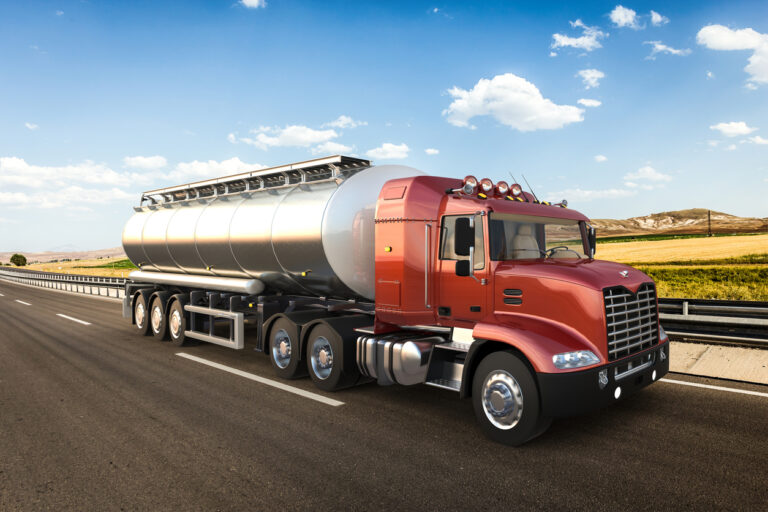

Every car hauler knows fuel is one of the biggest checks you write every month. So when a driver posts a video claiming he picked up two to three extra miles per gallon just by running his loaded carrier with the upper deck all the way up, haulers are going to stop scrolling. We watched it. Here is the claim, the theory behind it — and the real-world catches the video does not talk about.
View this post on Instagram
The claim
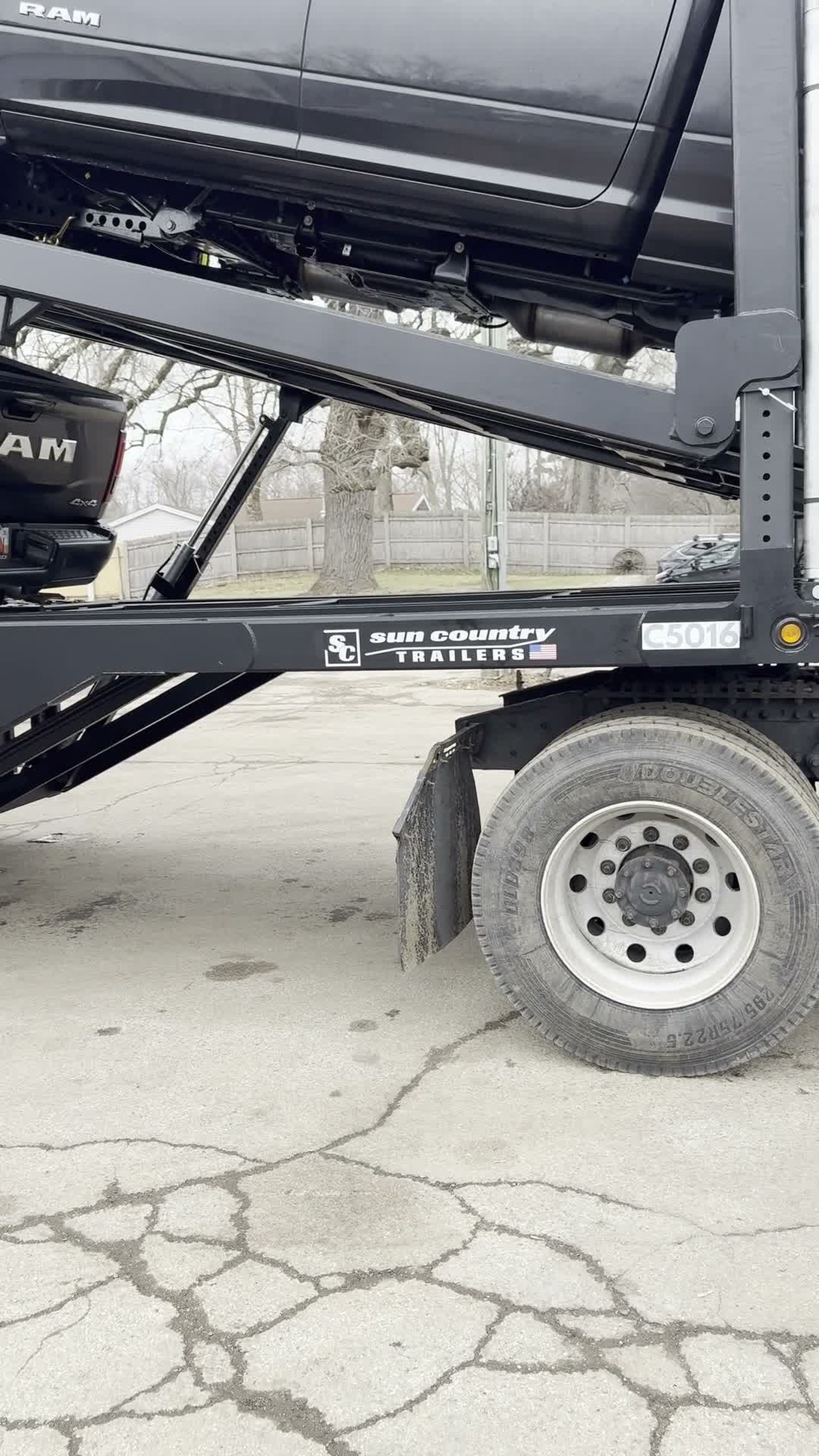
The video comes from car hauler Jenz (@jenz_ig), who walks around his loaded blue NEXTGEN carrier in a staging lot — Lincolns on the decks, a white F-150 up top — and explains his trick: he keeps the hydraulic upper deck fully raised instead of dropping it down over the load.
His numbers: around 6 mpg normally, 8 to 9 mpg with the deck up.
His explanation: the raised deck works like a spoiler. Instead of the air slamming off the back of the cab and tumbling into the gap and the load, the raised deck breaks the airflow and sends it down “in a wave” behind the cab — smoothing the air over the whole rig. Less turbulence, less drag, better mileage. That is his claim, in his words, from his truck.
Could the theory hold water?
Partly, maybe — at highway speed. Aerodynamics are real, and they matter more the faster you run. The gap between the cab and the load is a known drag trap, and anything that manages that airflow can change how hard the truck is working at 65–70 mph. A deflector effect from a raised deck is not crazy talk.
But here is the honest part: this is one driver, one truck, one load, and no controlled test. No A/B runs on the same route, same load, same wind — and wind, load weight, speed, and terrain swing a hauler’s mileage more than just about anything. A jump from 6 to 8 or 9 is a 33–50% improvement. That is an enormous claim for an airflow tweak, and extraordinary claims need more than one video’s worth of evidence.
The catches every hauler thinks of in the first ten seconds
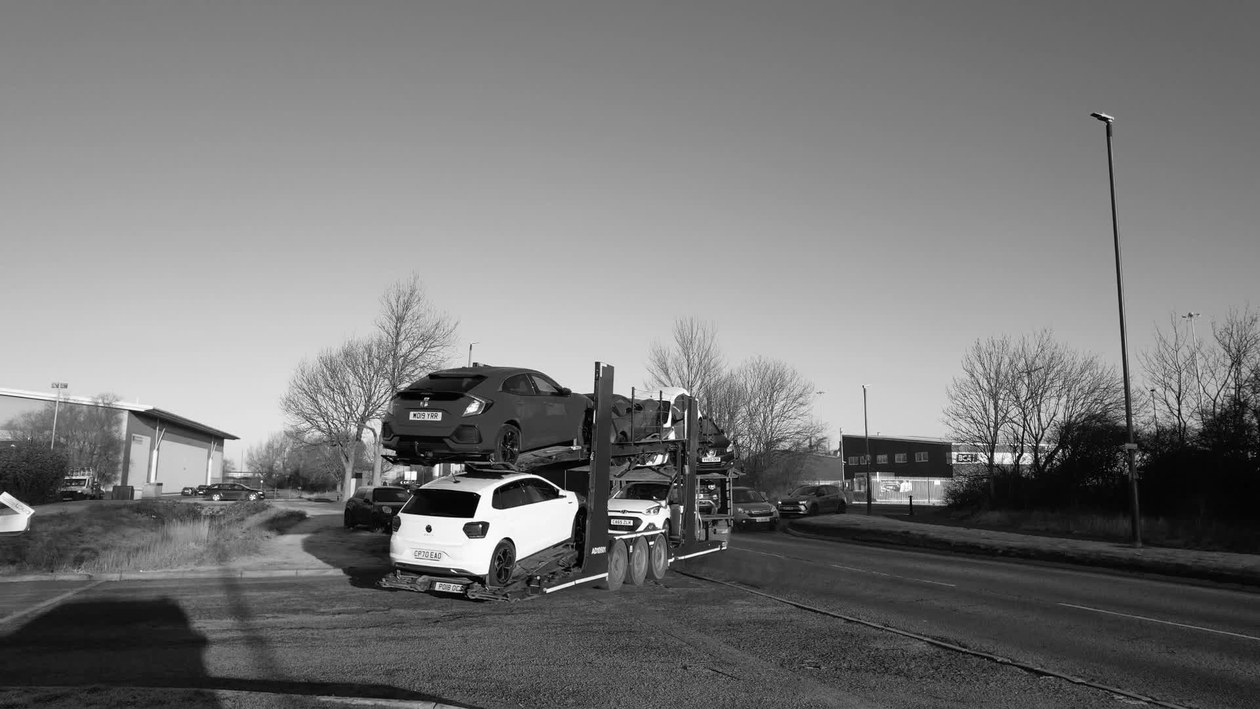
Height. This is the big one. A car carrier is already one of the tallest rigs on the road. Raise the upper deck fully with a tall SUV on it and your overall height climbs with it. Legal height limits, 13’6″ bridges, low underpasses, older East Coast routes, parking structures at delivery points — the map changes when you are taller. One low bridge ends the fuel savings conversation permanently, along with the top car and maybe your business.
Headroom for the top car. Decks are loaded to a planned height for a reason. Running the deck up changes clearances over the cab and between decks — fine for the load in his video, not automatically fine for yours.
Center of gravity and securement. A load carried higher is a load carried less stable. Crosswinds, ramps, and quick maneuvers all feel different with the weight up high, and the deck and hydraulics were engineered around normal running positions. Deck wear and stress over thousands of miles is a real cost to weigh against a fuel number nobody has verified.


Your mileage will vary — because everyone’s does. Load configuration, speed, wind, route, and the truck itself move mpg up and down every single day. One driver’s result on his routes is a story, not a spec sheet.
The bottom line
Credit where it is due: it is a smart, observant idea from a driver who clearly pays attention to his equipment, and the airflow logic is not nonsense. If it genuinely helps on his truck and his lanes, good for him.
For everybody else: file it under “interesting — test carefully.” If you try it at all, try it on routes you know are clear, measure your actual height before you roll, and track your fuel over several identical runs before you believe a number. And if the choice is between a maybe on mileage and a definitely on clearance — clearance wins. Every time.
Looking for a carrier built to work your lanes? Browse the car haulers and equipment for sale — or call Victor at 954-947-3096 and tell us what you run.
Source: Instagram reel by Jenz (@jenz_ig), posted Oct 23, 2026, demonstrating the raised-deck technique on a loaded NEXTGEN carrier — https://www.instagram.com/reel/De2puMXglMd/ (also posted to his Facebook page, Jenzig Carhauler). The mileage figures are the driver’s own claim from the video; they have not been independently tested or verified, and this article is commentary on the technique, not an endorsement or a fuel-economy guarantee for any truck, trailer, or load.
“Victor was to the point, very responsive, and I was a little hesitant about him finding me what I needed. Glad I trusted him, because he has great connections and he nailed it! Awesome 5307 at a great price! Definitely will work with again!”
“Great person to deal with, prices are great, good stuff you’re selling.”
“Great customer service, very knowledgeable people.”
“Great communication and timely response!!”
“Really friendly seller, I know him for a while and recommend for you.”
“Muy buena comunicación y rápida al momento.”