
The smallest tier of trucking is quietly emptying out — and the easy explanation is wrong. Owner-operators are not simply going out of business and parking their trucks. A large share of those trucks never leave the road at all. They just change whose name is on the authority.
The news
FreightWaves, working from the FMCSA Company Census File (snapshot dated November 9, 2026) and its own SONAR data, reports that the number of tractors run by one-to-six-truck carriers has slid from a 2023 peak near 398,000 to about 362,000 — a steady, three-and-a-half-year decline. This is not a small corner of the market: more than 1.8 million active carrier registrations fall into the one-to-six-truck band, the overwhelming majority of all registered carriers.
The squeeze is math, not mystery. ATRI put the average marginal cost of running a truck at a record $2.336 per mile in 2025, with driver pay the heaviest line at roughly 82 cents and fuel next at about 48 cents. Then 2026 rewrote the fuel math: the Department of Energy national average topped its previous all-time high in September and reached $6.127 a gallon by the week of November 9. At six to seven miles per gallon, diesel above six dollars runs roughly a dollar a mile in fuel alone — close to double a year earlier. Insurance adds about 10.6 cents per mile, up nearly four percent, and the smallest operators pay the most per unit with the least ability to negotiate.
Here is the part that gets misread: rates are not the problem. Spot van and reefer rates have firmed through 2026, running stronger for this time of year than any season since 2021, and contract pricing is forecast to climb into next year. The problem is that costs are rising faster than rates — and the biggest cost, fuel, is the one a spot-market operator cannot recover. A fuel surcharge is mostly a contract-freight mechanism. Spot rates are quoted all-in, so when diesel spikes, the owner-operator on the load board absorbs the full move into a rate he never got to reprice.
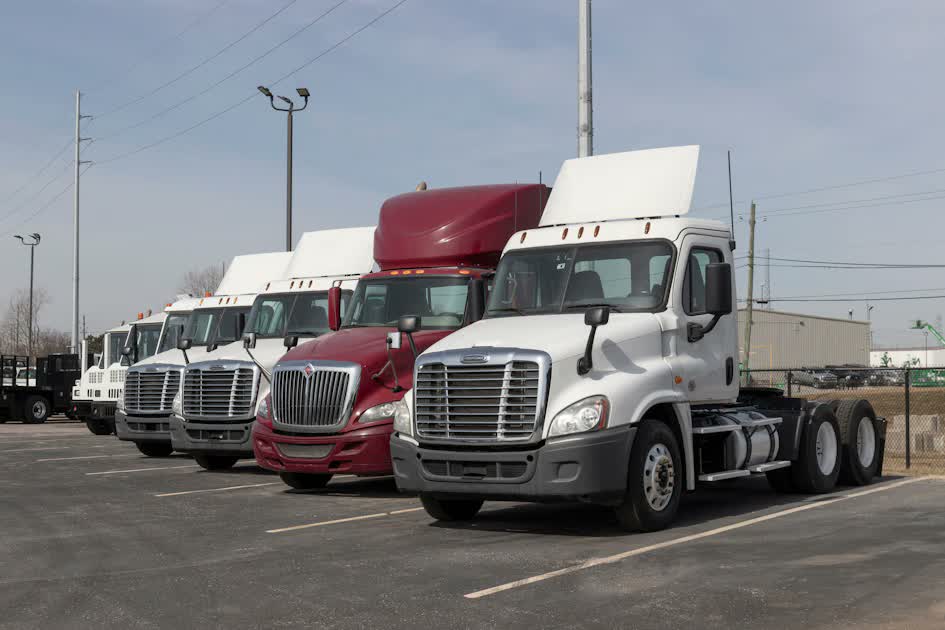
So where do the trucks go? Two places. Some operators lease on to a larger fleet, bringing the truck with them — the census shows leased tractors are only about 6.9% of the owner-operator tier, but 18.2% in the seven-to-19-truck band, 31.6% in the 20-to-100 band, and past 40% above that. Others sell the truck outright, usually to a fleet a size or two up buying good used iron at a discount. Either way, the equipment consolidates into mid-sized fleets — the 20-to-100 band holds only about 44,500 carriers, under two percent of all carriers, yet operates roughly 1.75 million power units — big enough to spread fuel, insurance and maintenance, small enough to stay nimble.


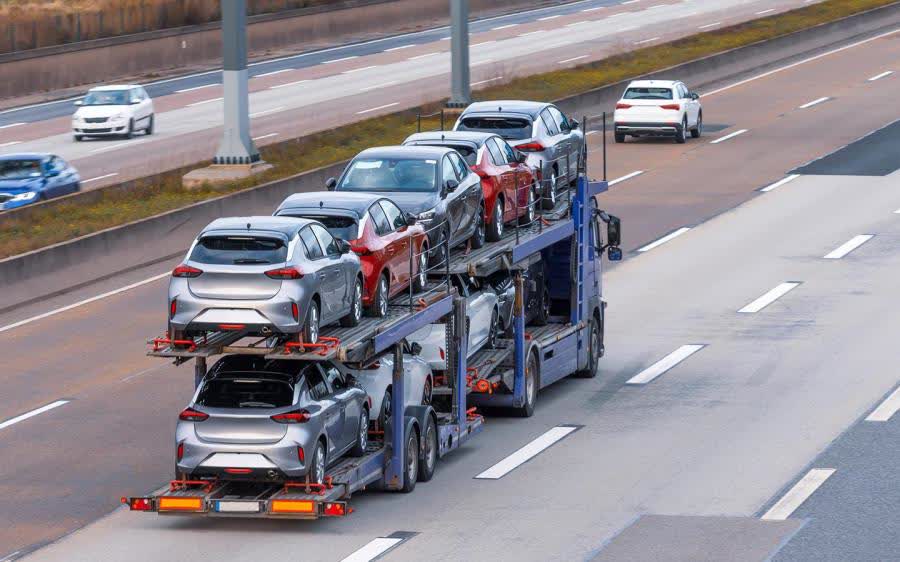
What this means for car haulers
Know your true cost per mile — to the penny. Car hauling is a small-fleet business. Most of the operators reading this run exactly the one-to-six trucks this data is about. At $2.336 a mile in average costs and roughly a dollar a mile in fuel, a load that “pays good” on the board can still lose money. The operators holding their ground, in FreightWaves’ read, are the ones who know their number and run the truck like a business, not a glorified job.
Spot-only is the exposed position. If every load comes off a board at an all-in rate, you eat every diesel spike whole. Direct relationships with dealers, auctions and repeat shippers — and steady freight through solid dispatching — are what put a floor under the rate side while fuel moves against you.
Leasing on is a business decision, not a surrender. Trading your own authority for a mid-sized fleet’s fuel program, insurance scale and freight base can be the smart call — plenty of capable operators are making it. What the data punishes is drifting: undercapitalized, spot-dependent, and waiting for the fuel bill to close the math for you.
If you are buying, this is your inventory weather. Exiting operators’ trucks and trailers land on the used market, often priced to move. Good used iron at a discount is exactly what a disciplined buyer wants — inspect it hard, price the maintenance it still needs, and do not overpay for someone else’s exit.
The bottom line: the small-fleet tier is shrinking because record costs are outrunning even rising rates for operators with no surcharge and no scale. The trucks are not disappearing — they are consolidating. Know your cost per mile, get off spot-only freight where you can, and make the stay-or-lease-on call on your terms, while it is still your call.
Call Victor at 954-947-3096 — if you need dispatching that keeps you loaded, equipment that earns, or a straight conversation about your next move, let’s talk.
Source: FreightWaves, “Why Owner-Operators Are Leaving The Small-Fleet Tier, And Where Their Trucks Go Next” (Adam Wingfield, November 2026) — https://www.freightwaves.com/news/why-owner-operators-are-leaving-the-small-fleet-tier-and-where-their-trucks-go-next — drawing on FreightWaves SONAR data and the FMCSA Company Census File snapshot dated November 9, 2026; operating-cost and insurance figures from ATRI’s 2026 Operational Costs of Trucking report; diesel price is the U.S. Department of Energy on-highway average of $6.127 a gallon for the week of November 9, 2026. Census power-unit data is self-reported through MCS-150 filings and includes private and intrastate carriers.